The Great Grid Upgrade: What It Means for Your Business Energy Bills
5 mins read
Updated: null
National Grid's major network overhaul will affect your electricity bills. Find out why it's happening, how much costs could rise, and what to do.

Compare energy prices
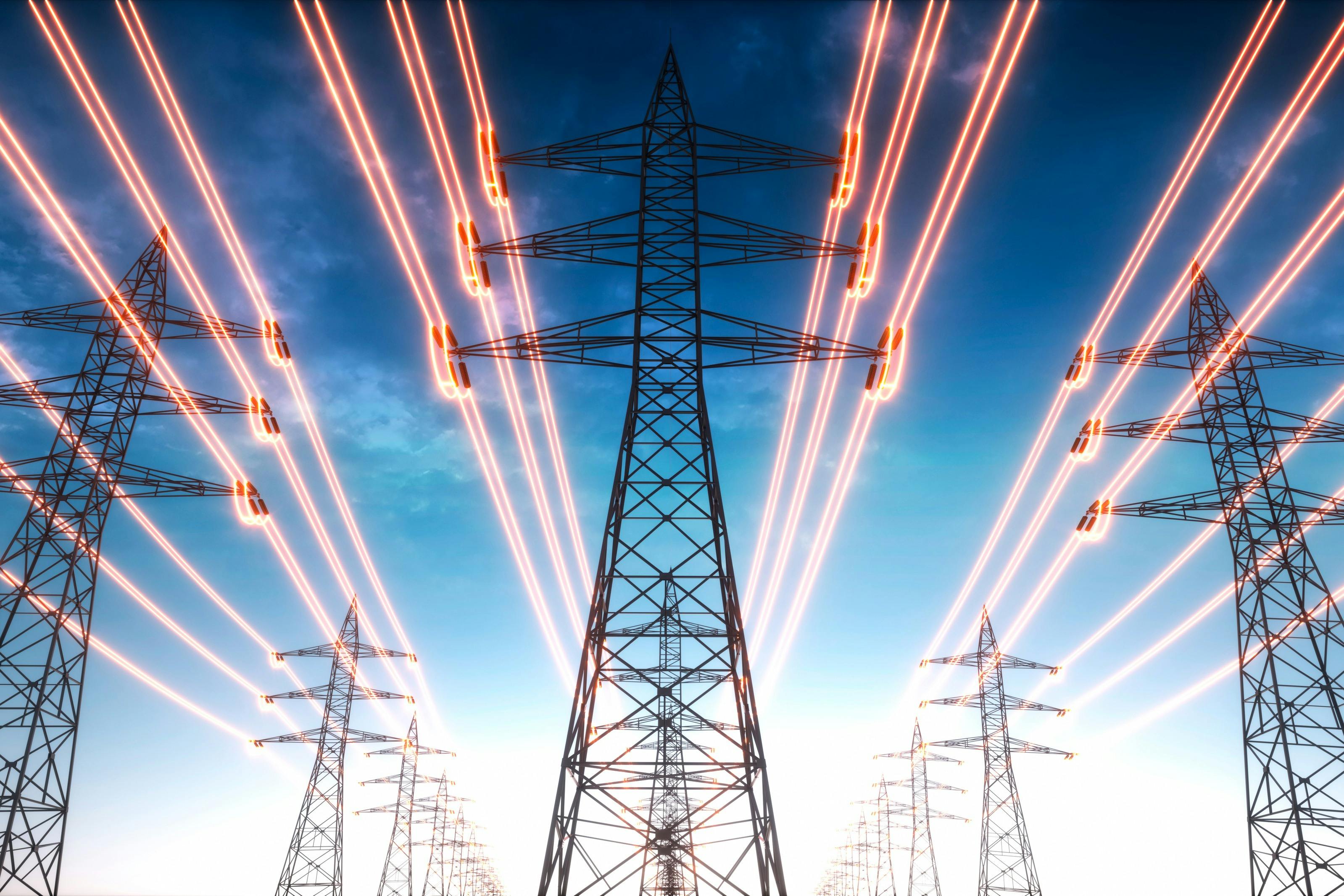
The UK’s electricity network is undergoing its largest overhaul in generations. Known as the Great Grid Upgrade, this multi-billion-pound programme from National Grid is designed to modernise the high-voltage transmission system across England and Wales. It involves building new pylons, overhead lines, and subsea cables to create a network fit for a future powered by renewable energy.
For businesses, this essential infrastructure project will have a direct and noticeable impact on electricity bills. Whilst the long-term goal is a more efficient and resilient grid, the short-term reality is an increase in certain network charges. This guide explains why the upgrade is necessary, how the costs will be passed on to your business, and what you can do to prepare.
Why Is the Grid Being Upgraded Now?
Much of the UK’s electricity grid was built in the mid-20th century, designed to distribute power from a small number of large, centralised fossil fuel power stations. Today’s energy system is vastly different. A growing share of our power comes from decentralised renewable sources, such as vast offshore wind farms in the North Sea and Scotland, which are often located far from the population centres in the South East where demand is highest.
The current grid simply wasn’t built for this model and is struggling to cope. To meet the government’s target of connecting 50GW of offshore wind by 2030 and decarbonising the power system, a major upgrade is unavoidable. With national electricity demand projected to increase by 50% by 2035, the network needs reinforcement to maintain reliability and support economic growth.
A critical problem with the existing infrastructure is its inability to transport all the renewable energy being generated. When wind farms produce more power than the grid can handle, National Grid has to pay them to shut down their turbines to prevent the system from being overloaded. These payments are known as ‘constraint costs’, and they reached a staggering £1.9 billion in 2025/26. Ultimately, this cost is passed on to all energy consumers through their bills.
How the Upgrade Will Affect Your Business Bills
The investment in the Great Grid Upgrade is recovered through a specific component of your electricity bill: the Transmission Network Use of System (TNUoS) charge. This is one of several ‘non-commodity costs’ that cover the operation and maintenance of the energy network. For many businesses, these non-commodity costs can already make up as much as 64% of the total bill.
Business electricity prices have seen significant volatility in recent years, as the market has responded to global events and changes in wholesale costs. The chart below shows how average prices have trended for businesses of different sizes. The Great Grid Upgrade introduces a new, structural cost increase that will be felt on top of these market movements.
Business Electricity Price Trend by Size
Average fully delivered prices: standing charges and all other non-VAT costs are included in the per-unit figure, so these are not directly comparable with the unit rate on a quote.
Higher Standing Charges on the Horizon
From April 2026, TNUoS charges are forecast to rise by around 60% for many businesses. This is expected to translate into an overall increase of 5-15% on the average business electricity bill. Crucially, as a result of Ofgem’s Targeted Charging Review, the majority of this increase will be applied to the daily standing charge, not the per-unit (kWh) rate. This means your bill will go up significantly, even if you take steps to reduce your electricity consumption. For businesses with half-hourly metering, the average TNUoS rate is projected to climb from around £16 per MWh to £31 per MWh.
This shift makes it more important than ever to understand the components of your bill. Our guide to Business Energy Standing Charges explains these fixed costs in more detail.
The Long-Term Goal: A More Efficient Grid
The primary justification for this investment is to create a more efficient grid that can deliver long-term savings. By strengthening the network, National Grid can transport more cheap renewable power from where it’s generated to where it’s needed, drastically reducing the billion-pound constraint costs. Ofgem has estimated that whilst the investment will add around £60 to network charges by 2030, it will create an overall saving of £30 compared to the alternative of letting constraint costs continue to escalate.
Project Timescales and Challenges
National Grid and its partners aim to deliver the 17 core projects that form the Great Grid Upgrade by 2030. However, a September 2026 report from the National Audit Office (NAO) warned that the programme is facing significant delays and is over budget. The report highlighted several key issues:
Project Delays: Of 56 projects considered essential to meet the 2030 target, 50 are projected to be delivered later than their optimal date.
Planning Hurdles: Acquiring land rights and navigating the planning and consent process have proved challenging and time-consuming.
Supply Chain Pressures: There is intense global competition for essential equipment, materials, and the skilled workforce needed to build the infrastructure.
The NAO warned that if these delays persist, the benefits of the upgrade could be eroded. It projected that constraint costs could soar as high as £7.8 billion by 2030, putting further upward pressure on consumer bills and undermining the project's long-term savings.
What This Means for Your Business
In the short to medium term, businesses must prepare and budget for higher electricity costs. The increase in standing charges is largely unavoidable, but understanding how it affects your contract is key. If you are on a ‘pass-through’ tariff, you will see the TNUoS charge itemised separately on your bill and will be directly exposed to the increase. If you are on a fixed, fully-inclusive tariff, the supplier will have factored this expected increase into the rates you were offered.
When your next contract renewal comes around, it is vital to compare offers based on the total estimated cost - including the standing charge - rather than focusing only on the unit rate. Our guide to Understanding Business Electricity Prices And Quotes can help you navigate the different contract types and find the best deal for your circumstances.
Over the long term, the Great Grid Upgrade is intended to deliver a more resilient and efficient energy network. This will bolster the UK’s energy security, enable the connection of new industries, and ultimately help to control costs by ensuring the cheapest, cleanest power gets to consumers.
Frequently Asked Questions
How Will the Great Grid Upgrade Charges Appear on My Bill?
It depends on your contract type. On a ‘pass-through’ tariff, the TNUoS charge is listed as a separate line item and will change annually. On an ‘all-inclusive’ fixed tariff, the supplier has estimated the cost and bundled it into your standing charge and unit rate, so you won’t see it listed separately.
Can I Avoid the Higher Charges by Using Less Electricity?
Not entirely. Because the cost increase is being applied mainly to the fixed daily standing charge, reducing your consumption (measured in kWh) will not shield you from this specific price hike. Energy efficiency is still crucial for managing your overall bill, but it won’t negate the rise in the fixed network cost component.
Is the Upgrade Guaranteed to Lower Bills in the Long Run?
The goal is to deliver net savings by eliminating the huge waste of paying renewable generators to stand down. However, this depends on the project being delivered successfully and on time. As the National Audit Office has warned, significant delays could lead to constraint costs rising faster than the new infrastructure can reduce them, putting the long-term savings at risk.
A Necessary Step for a Modern Energy System
The Great Grid Upgrade represents a fundamental and unavoidable investment in the UK’s future. It is the cornerstone of the strategy to meet legally binding net-zero targets and enhance the nation’s energy independence. While the programme brings short-term cost challenges for businesses and significant delivery risks, it is a vital step towards creating a cleaner, more reliable, and ultimately more affordable electricity system for the decades to come.
Compare energy prices
Related Guides & Tools
What is the National Grid? A Complete Guide
Learn about the National Grid with our comprehensive guide. Find out how it powers your daily life and its impact on the energy landscape.

What Businesses Need to Know About Zonal Energy Pricing
Find out how zonal energy pricing could impact your business energy costs. Learn what it means, how it works, and how to prepare for potential changes.

Understanding Business Electricity Prices And Quotes
Everything you need to know about business electricity, including prices, comparisons, tariffs, contracts, and what to look for when switching suppliers.
Guides
Get In Touch
© Switch Pal Limited 2026
All rights reserved. Switch Pal Limited is registered in England & Wales: 12545529
Registered address: 66 Paul Street, London, EC2A 4NA
Made with 💜 in London, UK