The Impact of Mobile Wallets on Traditional Card Payments
5 mins read
Updated: null
Explore how mobile wallets are transforming traditional card payments by offering enhanced convenience, security, and reducing the need for physical cards.

Start taking card payments now
Digital wallets have been one of the big game-changers in 21st-century finance. Accessing money without an external card has been a huge convenience to customers, and the switch away from traditional card payments to wallets that can be carried around on a mobile phone or other electronic device has been pronounced. But what is a digital wallet, and what do you need to know about them if you’re running a business?
What is a Mobile Wallet?
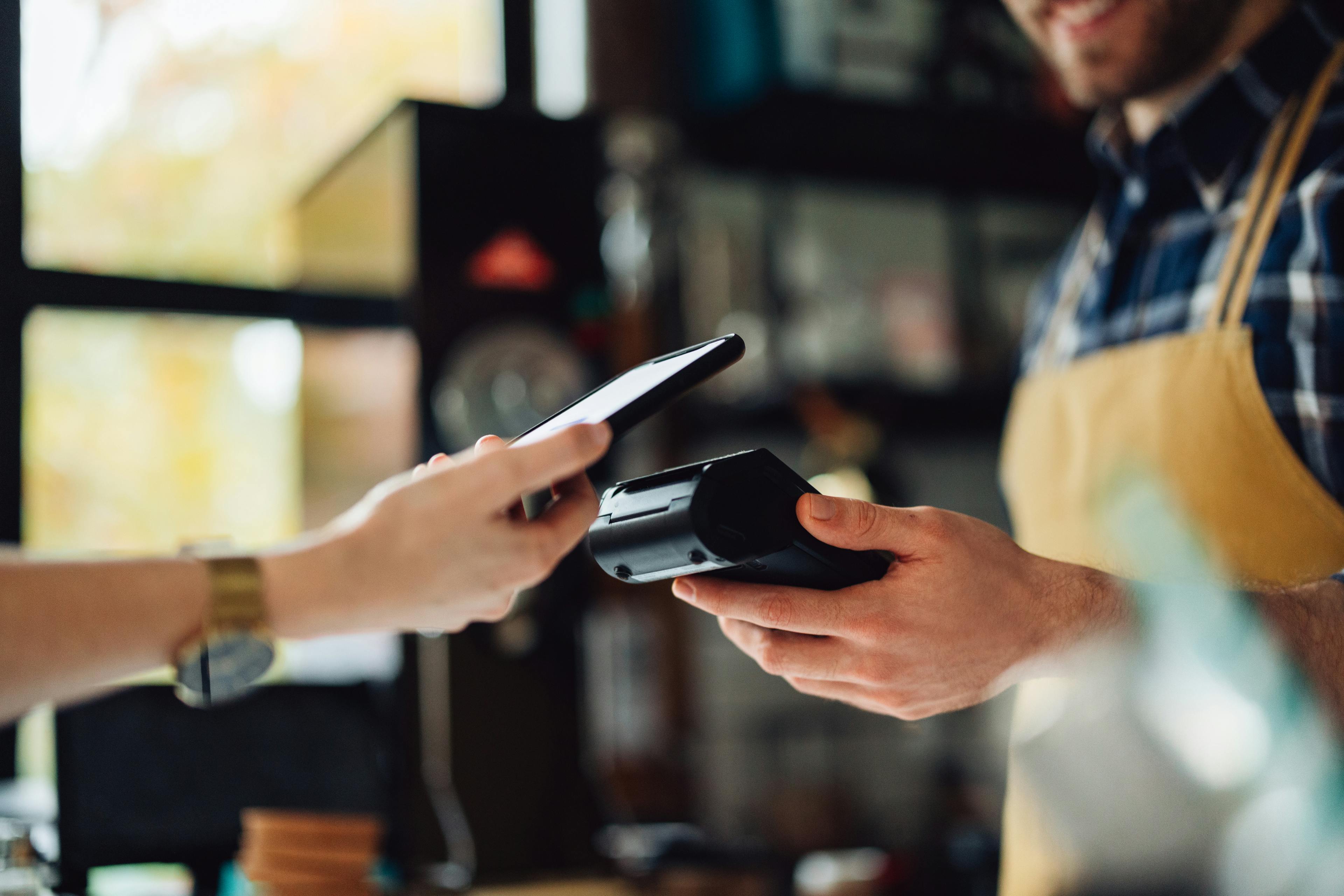
A mobile wallet is a digital application that stores payment information from credit cards, debit cards, and other payment methods on a mobile device, such as a smartphone, tablet, or smartwatch. It enables users to make in-store and online payments without the need to carry physical cards or cash. Mobile wallets often use technologies like Near Field Communication (NFC) or QR codes to facilitate contactless transactions.
A digital wallet, or an e-wallet, is a broader term encompassing mobile wallets and other digital payment tools. Digital wallets store financial information, such as payment card details, bank account information and even loyalty cards, allowing users to make secure transactions online and in physical stores. They can be accessed via various devices, including smartphones, tablets, and computers.
Difference Between Mobile Wallets and Mobile Banking
Mobile Wallets such as Apple Pay and Google Wallet store payment information for quick, contactless transactions using technologies like NFC or QR codes.
They're primarily used for making payments at retail locations and online. By contrast, mobile banking is far broader. It allows you to access and manage bank accounts, transfer money, pay bills, and monitor financial activities using a mobile device, through a comprehensive suite of banking services.
Mobile Banking includes various banking services such as account management, fund transfers, and bill payments. By comparison, mobile wallets may include person-to-person (P2P) payments. In contrast, mobile wallets use mobile devices to make point-of-sale (POS) transactions, enabling quick payments at retail locations and online.
Digital Wallets store payment information and facilitate quick transactions, offering convenience and enhanced security features like encryption and biometric authentication. Mobile banking securely holds and manages money, offering services like interest earnings and various financial products. It offers comprehensive financial management and higher security for savings.
The Growth of Digital Wallets in the UK
Digital wallet usage in the UK is rapidly increasing. According to Worldpay’s latest Global Payments Report, digital wallets accounted for 40% of UK e-commerce transaction value in 2025 and are forecast to reach 50% by 2030, with UK digital wallet spending expected to grow from £269 billion in 2025 to £453 billion by 2030 - a rise of 68%.
Several factors contribute to this growth. Digital wallets offer quick, contactless transactions, making them highly convenient for users. Merchants' increasing acceptance of mobile wallets, both online and in-store, has also facilitated this growth. Mobile wallets also provide advanced security features such as encryption and biometric authentication, reducing the risk of fraud.
Technological advancements have also contributed. The rise of smartphones and improved internet connectivity have made mobile wallets more accessible, and they are also known to help bring financial services to unbanked and underbanked sections of the population.
All of this has been playing out against a background of substantial e-commerce growth. This market is expanding rapidly, with digital wallets becoming the most popular online payment method, accounting for 40% of UK e-commerce transaction value. Digital wallet payments in-store are also on the rise - direct card use still accounts for 69% of UK point-of-sale spending, but Worldpay forecasts strong growth for wallets both online and in-store by 2030. Particularly prominent in this revolution is the influence of younger generations, particularly millennials and Gen Z.
Impact of Mobile Wallets on Traditional Card Payments
Mobile wallets have significantly disrupted traditional card payments by offering a more convenient, secure, and integrated payment method. They eliminate the need for physical cards and enable contactless transactions through smartphones and other devices.
This shift was accelerated by the COVID-19 pandemic, which increased the demand for contactless payment options. Mobile wallets also integrate with various digital services, enhancing the overall user experience.
Consumers have been found to appreciate the ease and speed of mobile wallet transactions, leading to higher adoption rates. That convenience has also led to a change in shopping habits, with an increase in more impulsive purchases, as consumers can quickly complete transactions without the need for physical cash or cards. Mobile wallets also often include loyalty programs and rewards, encouraging repeat usage and fostering customer loyalty.
These benefits don’t only apply to consumers. Mobile wallets can lower transaction fees for businesses compared to traditional card payments. Financial institutions have found that they can generate new revenue through mobile wallet services, such as transaction fees and value-added services, and that the increased financial inclusion that they offer has also expanded the customer base. Businesses can leverage mobile wallets to offer personalised promotions and rewards, improving customer engagement and satisfaction.
The Role of Digital Wallets in Fintech
Digital wallets are a key component of the fintech revolution, transforming how consumers manage and use money. They integrate advanced technologies like blockchain, artificial intelligence, and biometric authentication to enhance security and user experience.
Technologies like NFC and QR codes enable quick, secure transactions without physical contact, while AI and Machine Learning can personalise user experiences, detect fraud, and provide financial insights. Blockchain technology ensures secure, transparent transactions and supports the development of decentralised finance (DeFi) applications.
Leading fintech companies in the digital wallet space include:
Venmo: Known for their user-friendly interface and social payment features.
Revolut: Offer various financial services, including currency exchange and cryptocurrency trading.
Alipay: A major player in the global digital wallet market, providing extensive payment and financial services.
SoFi: Combine digital wallet functionalities with personal finance management and lending services.
Security and Privacy in Mobile Wallets
Mobile wallets employ advanced security measures such as encryption, tokenisation, and biometric authentication (fingerprint or facial recognition) to protect user data and transactions. Two-factor authentication (2FA) and one-time PINs further enhance security by adding additional layers of protection.
Digital wallets offer superior security compared to traditional card payments. While physical cards can be skimmed or stolen, digital wallets use encryption and tokenisation to protect sensitive information. Additionally, biometric authentication and 2FA make unauthorised access more difficult. Traditional card payments rely on PIN codes and signature verification, less secure than the advanced technologies used in digital wallets.
Security concerns remain, the most common being the potential for data breaches, unauthorised access, and the misuse of personal information. Digital wallet providers implement strict data protection measures to address these issues, such as end-to-end encryption and regular security audits. Transparency about data usage and robust privacy policies also help build user trust.
Future of Mobile Wallets in the UK
The UK is witnessing a significant shift towards mobile payments, driven by technological advancements and changing consumer preferences. Key trends include the rise of contactless payments, the integration of blockchain for secure transactions, and the growing popularity of wearable payment devices. By 2030, the payment infrastructure will support a seamless, instant, cost-effective payment experience.
The UK is moving towards a cashless society - UK Finance reports that cash accounted for just 9% of all payments in 2024, a figure forecast to fall to around 4% by 2034. However, challenges still need to be addressed, such as ensuring access for the estimated 1.2 million people who still mainly rely on cash. The transition will require careful management to avoid excluding vulnerable groups.
Mobile wallets are revolutionising financial services by offering convenience, security, and integration with other digital services. They enable quick, contactless transactions and support the development of a cashless economy. As mobile wallets evolve, they will play a pivotal role in making financial transactions more accessible and secure.
A combination of technological advancements has brought mobile wallets to the fore, and this was only accelerated by the pandemic and a sudden need for people to have access to hands-free payment. This widespread adoption is already altering spending habits, and the businesses that understand this the best will benefit the most from the further changes that are yet to come. Cash is no longer king, and businesses that recognise that have huge new marketplaces they can explore.
Start taking card payments now
Related Guides & Tools

A Guide to Payment Habits and Preferences by Generation
Discover how payment habits vary across generations with our guide, covering trends, preferences, and the impact on consumer behaviour.

Why Offering Multiple Payment Methods Boosts Sales
Discover how offering multiple payment methods increases sales by improving customer convenience, reducing cart abandonment, and boosting conversion rates.
How to Accept Card Payments in Person
Unlock convenience and boost sales with in-person card payments. Explore the benefits and how-tos of accepting cards today.
Guides
Get In Touch
© Switch Pal Limited 2026
All rights reserved. Switch Pal Limited is registered in England & Wales: 12545529
Registered address: 66 Paul Street, London, EC2A 4NA
Made with 💜 in London, UK